Designing gardens for the U.S. Southeast
A long growing season with abundant but uneven rainfall, heavy clay in the Piedmont and fast-draining sands on the Coastal Plain. Heat, humidity and disease pressure matter more than winter cold. Covers north and central Florida; south Florida (zones 10b–11) is out of the pilot.
In the Southeast the long season is both the gift and the challenge. Plants grow fast and bloom for months, but summer heat, humidity and disease pressure do more damage than winter cold, and storms test every tree near a house.
Good design here plants in fall, picks species that handle humid heat as well as the occasional hard freeze, and treats soil — dense Piedmont clay or fast-draining Coastal Plain sand — as the first design decision rather than an afterthought.
Climate
Humid subtropical across most of the region: hot, humid summers with frequent thunderstorms, short mild winters, and a tropical-storm season from June to November. Rain is plentiful overall but arrives unevenly, so dry spells of several weeks are normal.
Hardiness zones run from about 6b in the mountains of Tennessee and North Carolina to 10a in central Florida. Heat tolerance matters as much as hardiness; many plants rated for the zone still fail in August.
Humid subtropical (Köppen Cfa); long hot humid summers, mild short winters, frequent summer thunderstorms and tropical-storm season June–November.
Design guidance
- Fall through early winter is the best planting season: roots grow in warm soil while top growth is dormant and evaporation is low.
- Choose plants for humid heat as well as cold hardiness; many northern perennials and conifers fail from summer heat and disease, not winter.
- Amend compacted Piedmont clay over whole beds rather than individual holes, and plant slightly high so crowns drain.
- Use wind-firm, deep-rooted trees (live oak, bald cypress, sabal palm) where hurricanes and tropical storms are expected, and keep large trees away from houses.
- Several popular ornamentals (nandina, lantana, Mexican petunia, Chinese wisteria) are listed invasive in Florida; native alternatives exist for each.
- Pine straw is the regional mulch; keep it 5–8 cm deep and away from siding where termites are a concern.
Design examples
A shade-and-shelter foundation planting
Replace a row of sheared shrubs with layered natives: sweetbay magnolia or redbud as small trees set well back from the house, oakleaf hydrangea and Virginia sweetspire beneath, and American beautyberry for violet fall fruit. Keep large trees at least half their mature spread from walls.
Plants: Sweetbay magnolia, Eastern redbud, Oakleaf hydrangea, Virginia sweetspire, American beautyberry.
A sunny pollinator meadow strip
In full sun on sandy or well-drained soil, a meadow of pink muhly, coreopsis, blanket flower and scarlet sage blooms from late spring into fall, with muhly’s pink haze arriving just as summer flowers fade. Coral honeysuckle on the fence adds spring hummingbird bloom.
Plants: Pink muhly grass, Lanceleaf coreopsis, Coral honeysuckle.
A storm-wise canopy
Where tropical storms are expected, favour deep-rooted, wind-firm trees such as live oak and bald cypress, give them room, and avoid planting large trees where a fall would reach the house.
Plants: Southern live oak, Bald cypress, Yaupon holly.
Planting calendar
Windows are anchored to typical frost dates — about March 25 (last spring frost) and November 10 (first fall frost) for the region’s default zone 8a. Your site can differ by weeks.
| When | What |
|---|---|
| Fall to early winter (Oct–Dec) | The best planting season: roots grow in warm soil while tops are dormant and evaporation is low. Plant trees, shrubs and perennials. |
| Late winter (Jan–Feb) | Prune summer-flowering shrubs. Cut back perennials and grasses. Refresh pine straw. |
| Spring (Mar–May) | Plant warm-season perennials after the last frost. Water new plantings through dry spells as heat builds. |
| Summer (Jun–Sep) | Avoid planting in peak heat. Water deeply and less often. Watch for storm damage and leaning trees. |
Cautions
- Nandina, lantana, Mexican petunia and Chinese wisteria are among plants listed as invasive in Florida and some neighbouring states. Check your state’s list; native alternatives exist for each.
- Plant crowns slightly high in clay so they drain; amend whole beds rather than single holes.
- South Florida (zones 10b–11) is outside the pilot region and needs a different palette.
Read the full guide: native plants for the Southeast.
Native palette for the Southeast
Plants in the catalog recorded as native to this region, by layer. Native doesn’t mean right for every site — check light, moisture and soil on each plant page.
Trees (20)
- Red mapleAcer rubrum · 12–18 m (39–59 ft) · draft
- Sugar mapleAcer saccharum · 15–22 m (49–72 ft) · draft
- Downy serviceberryAmelanchier arborea · 5–8 m (16–26 ft) · draft
- River birchBetula nigra · 12–18 m (39–59 ft) · draft
- American hornbeamCarpinus caroliniana · 6–9 m (20–30 ft) · draft
- Eastern redbudCercis canadensis · 6–9 m (20–30 ft) · draft
- White fringetreeChionanthus virginicus · 4–6 m (13–20 ft) · draft
- Flowering dogwoodCornus florida · 6–9 m (20–30 ft) · draft
- Skyline thornless honeylocustGleditsia triacanthos var. inermis 'Skyline' · 12–15 m (39–49 ft) · draft
- American hollyIlex opaca · 9–15 m (30–49 ft) · draft
- SweetgumLiquidambar styraciflua · 18–23 m (59–75 ft) · draft
- Tulip treeLiriodendron tulipifera · 21–30 m (69–98 ft) · draft
- Southern magnoliaMagnolia grandiflora · 15–24 m (49–79 ft) · draft
- Sweetbay magnoliaMagnolia virginiana · 6–10 m (20–33 ft) · draft
- Black gumNyssa sylvatica · 10–18 m (33–59 ft) · draft
- White oakQuercus alba · 18–25 m (59–82 ft) · draft
- Pin oakQuercus palustris · 15–21 m (49–69 ft) · draft
- Willow oakQuercus phellos · 15–23 m (49–75 ft) · draft
- Northern red oakQuercus rubra · 18–23 m (59–75 ft) · draft
- Southern live oakQuercus virginiana · 12–18 m (39–59 ft) · draft
Conifers (6)
- Eastern red cedarJuniperus virginiana · 9–15 m (30–49 ft) · draft
- Longleaf pinePinus palustris · 18–24 m (59–79 ft) · draft
- Eastern white pinePinus strobus · 15–24 m (49–79 ft) · draft
- Loblolly pinePinus taeda · 18–27 m (59–89 ft) · draft
- Bald cypressTaxodium distichum · 15–21 m (49–69 ft) · draft
- Eastern hemlockTsuga canadensis · 12–21 m (39–69 ft) · draft
Palms (1)
Shrubs (22)
- Black chokeberryAronia melanocarpa · 0.9–1.8 m (3–6 ft) · draft
- American beautyberryCallicarpa americana · 1.2–1.8 m (4–6 ft) · draft
- ButtonbushCephalanthus occidentalis · 1.8–3.6 m (6–12 ft) · draft
- SummersweetClethra alnifolia · 1–2.4 m (3–8 ft) · draft
- Hop bushDodonaea viscosa · 2.4–3.6 m (8–12 ft) · draft
- Dwarf fothergillaFothergilla gardenii · 0.6–1 m (2–3 ft) · draft
- FirebushHamelia patens · 1.5–3 m (5–10 ft) · draft
- Annabelle smooth hydrangeaHydrangea arborescens 'Annabelle' · 0.9–1.5 m (3–5 ft) · draft
- Oakleaf hydrangeaHydrangea quercifolia · 1.5–2.5 m (5–8 ft) · draft
- InkberryIlex glabra · 1.5–2.4 m (5–8 ft) · draft
- WinterberryIlex verticillata · 1.8–3 m (6–10 ft) · draft
- Yaupon hollyIlex vomitoria · 4–6 m (13–20 ft) · draft
- Virginia sweetspireItea virginica · 0.9–1.8 m (3–6 ft) · draft
- Mountain laurelKalmia latifolia · 1.5–3 m (5–10 ft) · draft
- Northern spicebushLindera benzoin · 1.8–3.6 m (6–12 ft) · draft
- Southern wax myrtleMorella cerifera · 3–6 m (10–20 ft) · draft
- Diabolo ninebarkPhysocarpus opulifolius 'Monlo' · 1.8–2.4 m (6–8 ft) · draft
- Catawba rhododendronRhododendron catawbiense · 1.8–3 m (6–10 ft) · draft
- Gro-Low fragrant sumacRhus aromatica 'Gro-Low' · 0.6–0.9 m (2–3 ft) · draft
- Saw palmettoSerenoa repens · 1.2–2.1 m (4–7 ft) · draft
- Highbush blueberryVaccinium corymbosum · 1.5–2.4 m (5–8 ft) · draft
- Arrowwood viburnumViburnum dentatum · 1.8–3 m (6–10 ft) · draft
Grasses (4)
- Northern sea oatsChasmanthium latifolium · 0.6–1.2 m (2–4 ft) · draft
- Pink muhly grassMuhlenbergia capillaris · 0.6–0.9 m (2–3 ft) · draft
- Shenandoah switchgrassPanicum virgatum 'Shenandoah' · 0.9–1.2 m (3–4 ft) · draft
- Little bluestemSchizachyrium scoparium · 0.6–1.2 m (2–4 ft) · draft
Perennials (21)
- Common yarrowAchillea millefolium · 0.5–0.9 m (1–3 ft) · draft
- Eastern red columbineAquilegia canadensis · 0.3–0.6 m (1–2 ft) · draft
- Swamp milkweedAsclepias incarnata · 0.9–1.5 m (3–5 ft) · draft
- Butterfly weedAsclepias tuberosa · 0.5–0.8 m (1–2 ft) · draft
- Blue false indigoBaptisia australis · 0.9–1.2 m (3–4 ft) · draft
- Lanceleaf coreopsisCoreopsis lanceolata · 0.3–0.6 m (1–2 ft) · draft
- Moonbeam threadleaf coreopsisCoreopsis verticillata 'Moonbeam' · 0.5–0.6 m (1–2 ft) · draft
- Purple coneflowerEchinacea purpurea · 0.6–1.2 m (2–4 ft) · draft
- Little Joe Joe-Pye weedEutrochium dubium 'Little Joe' · 0.9–1.2 m (3–4 ft) · draft
- Rose verbenaGlandularia canadensis · 0.2–0.5 m (0–1 ft) · draft
- American alumrootHeuchera americana · 0.3–0.5 m (1 ft) · draft
- Dense blazing starLiatris spicata · 0.6–1.2 m (2–4 ft) · draft
- Cardinal flowerLobelia cardinalis · 0.6–1.2 m (2–4 ft) · draft
- Scarlet bee balmMonarda didyma · 0.6–1.2 m (2–4 ft) · draft
- Wild bergamotMonarda fistulosa · 0.6–1.2 m (2–4 ft) · draft
- Husker Red foxglove beardtonguePenstemon digitalis 'Husker Red' · 0.6–0.9 m (2–3 ft) · draft
- Jeana garden phloxPhlox paniculata 'Jeana' · 0.9–1.2 m (3–4 ft) · draft
- Goldsturm black-eyed SusanRudbeckia fulgida var. sullivantii 'Goldsturm' · 0.6–0.8 m (2 ft) · draft
- Black-eyed SusanRudbeckia hirta · 0.3–0.9 m (1–3 ft) · draft
- Fireworks goldenrodSolidago rugosa 'Fireworks' · 0.9–1.2 m (3–4 ft) · draft
- New England asterSymphyotrichum novae-angliae · 0.9–1.5 m (3–5 ft) · draft
Groundcovers (7)
- Canadian wild gingerAsarum canadense · 0.1–0.2 m (0–1 ft) · draft
- Pennsylvania sedgeCarex pensylvanica · 0.2–0.3 m (0–1 ft) · draft
- Allegheny spurgePachysandra procumbens · 0.2–0.3 m (0–1 ft) · draft
- Golden ragwortPackera aurea · 0.1–0.3 m (0–1 ft) · draft
- Moss phloxPhlox subulata · 0.1–0.2 m (0 ft) · draft
- Christmas fernPolystichum acrostichoides · 0.3–0.6 m (1–2 ft) · draft
- FoamflowerTiarella cordifolia · 0.2–0.3 m (0–1 ft) · draft
Vines (7)
- CrossvineBignonia capreolata · 9–15 m (30–49 ft) · draft
- Trumpet creeperCampsis radicans · 9–12 m (30–39 ft) · draft
- Carolina jessamineGelsemium sempervirens · 3–6 m (10–20 ft) · draft
- Coral honeysuckleLonicera sempervirens · 3–6 m (10–20 ft) · draft
- Virginia creeperParthenocissus quinquefolia · 9–15 m (30–49 ft) · draft
- Purple passionflowerPassiflora incarnata · 3–7.5 m (10–25 ft) · draft
- Amethyst Falls American wisteriaWisteria frutescens 'Amethyst Falls' · 4.5–9 m (15–30 ft) · draft
Succulents (2)
Open the Southeast sample garden
A finished Southeast design built from this palette. It opens in the planner as your own copy — change anything.
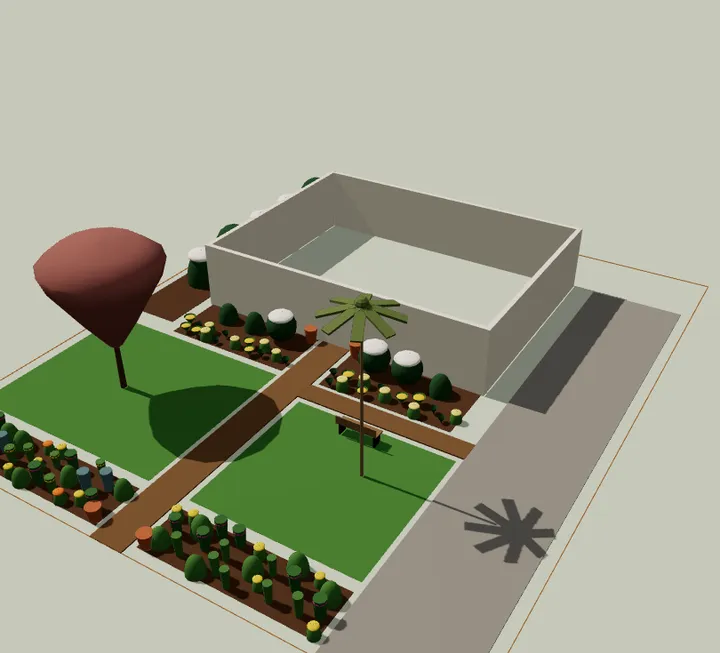
Southeast · Zone 8a
Southeast front yard
Driveway, front walk, foundation beds, a crape myrtle and palmetto, and a native meadow strip.
102 plants · 16 species
Open this sample
Plan a Southeast garden
Set your region, zone and frost dates, then design with the regional palette — the planner checks hardiness, light and moisture as you go.