Butterfly weed
Asclepias tuberosa L.
Also called butterfly weed, butterfly milkweed.
Bright orange milkweed for dry, sunny sites and a monarch butterfly host plant. Long-lived once its deep taproot is established.

Size over time
Typical landscape size 0.5–0.8 m (18–30 in) tall and 0.5–0.6 m (18–24 in) wide; slow growth, about 4 years to maturity. Intermediate sizes use the planner’s growth curve (k = 0.12) from the #1 install size.
Bloom
Orange flowers, Jun–Aug (northern-hemisphere months; timing shifts with region and season).
| Plant | J | F | M | A | M | J | J | A | S | O | N | D |
|---|---|---|---|---|---|---|---|---|---|---|---|---|
| Butterfly weed : Jun–Aug |
Design notes
- Emerges late in spring — mark its spot so it is not dug up.
- Deep taproot: plant young plugs and do not divide or move.
- Aphids are common and do no lasting harm; avoid insecticides on milkweeds.
Regions
Native range: Most of the U.S. east of the Rockies and the Southwest.
Native to these OpenLandscape3D pilot regions:
Native status describes where the species occurs naturally. It is not a promise that it suits a particular garden; site conditions decide that.
In the guides
Butterfly weed comes up in these guides:
Related plants
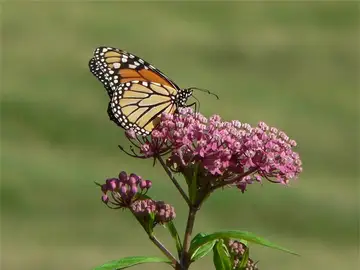 Swamp milkweed Asclepias incarnata · Perennial · 0.9–1.5 m (3–5 ft)
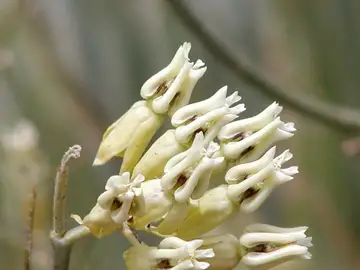 Desert milkweed Asclepias subulata · Perennial · 0.9–1.5 m (3–5 ft)
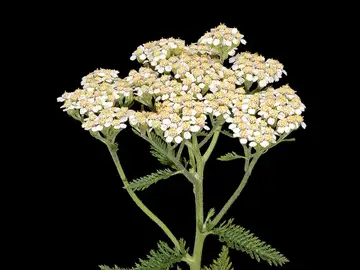 Common yarrow Achillea millefolium · Perennial · 0.5–0.9 m (1–3 ft)
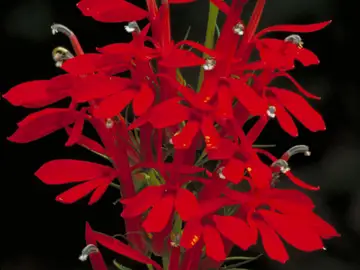 Cardinal flower Lobelia cardinalis · Perennial · 0.6–1.2 m (2–4 ft)
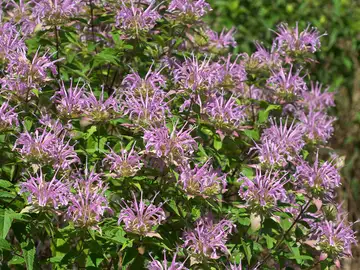 Wild bergamot Monarda fistulosa · Perennial · 0.6–1.2 m (2–4 ft)
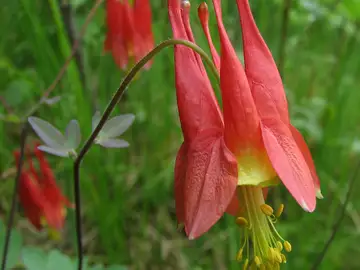 Eastern red columbine Aquilegia canadensis · Perennial · 0.3–0.6 m (12–24 in)
Try Butterfly weed in a plan
Opens your own copy of a finished sample garden in the planner with Butterfly weed ready to place; the planner checks it against that garden’s zone, light and moisture.
Plan with Butterfly weed
Place it in a design, check it against your zone, light and moisture, and see it at year three and year ten.