Allegheny spurge
Pachysandra procumbens Michx.
Native pachysandra with mottled matte leaves and fragrant bottlebrush flowers in early spring. Clumps slowly rather than running.

Size over time
Typical landscape size 0.2–0.3 m (6–12 in) tall and 0.3–0.5 m (12–18 in) wide; slow growth, about 5 years to maturity. Intermediate sizes use the planner’s growth curve (k = 0.12) from the plug install size.
Bloom
White flowers, Mar–Apr (northern-hemisphere months; timing shifts with region and season).
| Plant | J | F | M | A | M | J | J | A | S | O | N | D |
|---|---|---|---|---|---|---|---|---|---|---|---|---|
| Allegheny spurge : Mar–Apr |
Design notes
- Native alternative to Japanese pachysandra and English ivy.
- Old leaves look tattered by spring — mow or clip before new growth.
Regions
Native range: Southeastern U.S., from Kentucky to Florida and Louisiana.
Native to these OpenLandscape3D pilot regions:
Native status describes where the species occurs naturally. It is not a promise that it suits a particular garden; site conditions decide that.
Related plants
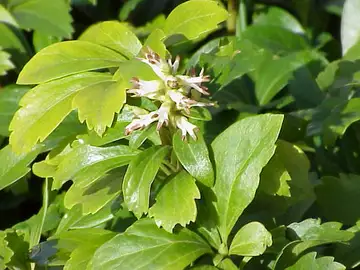 Japanese pachysandra Pachysandra terminalis · Groundcover · 0.2–0.3 m (6–10 in)
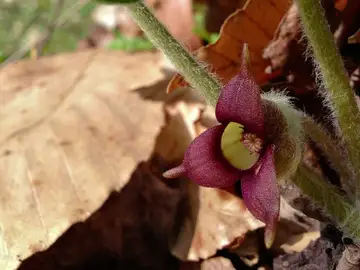 Canadian wild ginger Asarum canadense · Groundcover · 0.1–0.2 m (4–8 in)
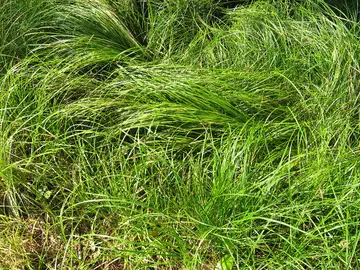 Pennsylvania sedge Carex pensylvanica · Groundcover · 0.2–0.3 m (6–10 in)
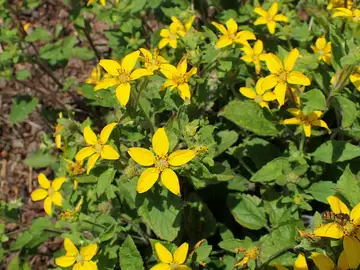 Green-and-gold Chrysogonum virginianum · Groundcover · 0.1–0.3 m (4–10 in)
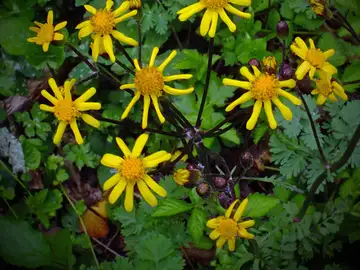 Golden ragwort Packera aurea · Groundcover · 0.1–0.3 m (4–12 in)
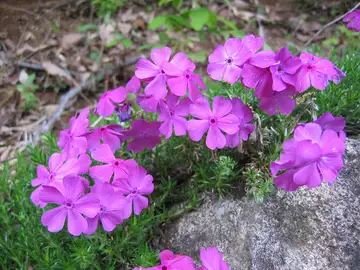 Moss phlox Phlox subulata · Groundcover · 0.1–0.2 m (4–6 in)
Try Allegheny spurge in a plan
Opens your own copy of a finished sample garden in the planner with Allegheny spurge ready to place; the planner checks it against that garden’s zone, light and moisture.
Plan with Allegheny spurge
Place it in a design, check it against your zone, light and moisture, and see it at year three and year ten.