Scarlet bee balm
Monarda didyma L.
Also called scarlet bee balm, Oswego tea.
Aromatic native mint with shaggy scarlet flower heads that are among the best hummingbird flowers of the Northeast.

Size over time
Typical landscape size 0.6–1.2 m (2–4 ft) tall and 0.6–0.9 m (2–3 ft) wide; fast growth, about 2 years to maturity. Intermediate sizes use the planner’s growth curve (k = 0.45) from the #1 install size.
Bloom
Scarlet red flowers, Jul–Aug (northern-hemisphere months; timing shifts with region and season).
| Plant | J | F | M | A | M | J | J | A | S | O | N | D |
|---|---|---|---|---|---|---|---|---|---|---|---|---|
| Scarlet bee balm : Jul–Aug |
Design notes
- Powdery mildew is common in dry soil and still air; mildew-resistant cultivars such as 'Jacob Cline' help.
- Spreads by runners — divide every 2–3 years.
Regions
Native range: Northeastern U.S. and the Appalachians.
Native to these OpenLandscape3D pilot regions:
Native status describes where the species occurs naturally. It is not a promise that it suits a particular garden; site conditions decide that.
Related plants
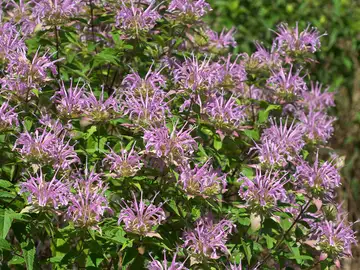 Wild bergamot Monarda fistulosa · Perennial · 0.6–1.2 m (2–4 ft)
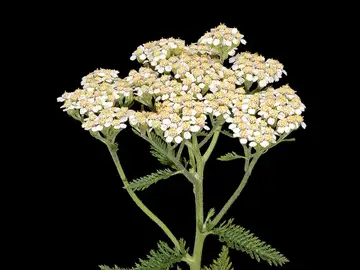 Common yarrow Achillea millefolium · Perennial · 0.5–0.9 m (1–3 ft)
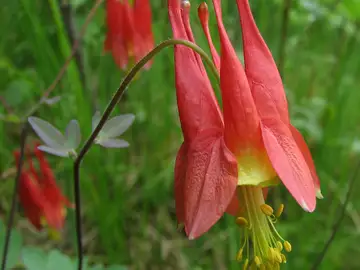 Eastern red columbine Aquilegia canadensis · Perennial · 0.3–0.6 m (12–24 in)
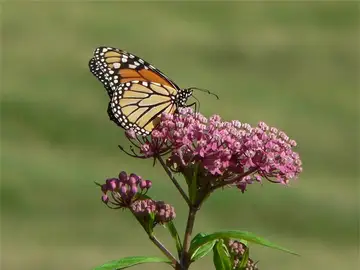 Swamp milkweed Asclepias incarnata · Perennial · 0.9–1.5 m (3–5 ft)
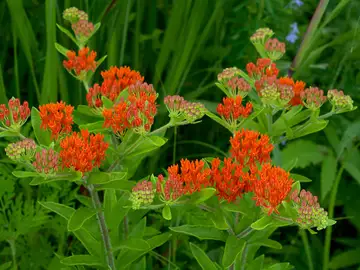 Butterfly weed Asclepias tuberosa · Perennial · 0.5–0.8 m (18–30 in)
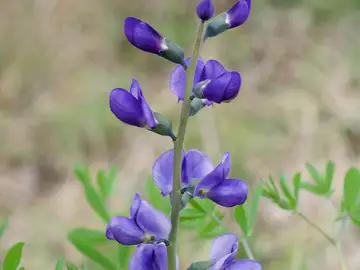 Blue false indigo Baptisia australis · Perennial · 0.9–1.2 m (3–4 ft)
Try Scarlet bee balm in a plan
Opens your own copy of a finished sample garden in the planner with Scarlet bee balm ready to place; the planner checks it against that garden’s zone, light and moisture.
Plan with Scarlet bee balm
Place it in a design, check it against your zone, light and moisture, and see it at year three and year ten.