Texas mountain laurel
Dermatophyllum secundiflorum (Ortega) Gandhi & Reveal
Also called mescal bean. Synonyms: Sophora secundiflora, Calia secundiflora.
Slow evergreen shrub or small tree with glossy leaflets and grape-scented violet flower clusters in early spring.

Size over time
Typical landscape size 3–4.5 m (10–15 ft) tall and 2.4–3 m (8–10 ft) wide; slow growth, about 10 years to maturity. Intermediate sizes use the planner’s growth curve (k = 0.12) from the #3 install size.
Bloom
Violet flowers, Mar–Apr (northern-hemisphere months; timing shifts with region and season).
| Plant | J | F | M | A | M | J | J | A | S | O | N | D |
|---|---|---|---|---|---|---|---|---|---|---|---|---|
| Texas mountain laurel : Mar–Apr |
Design notes
- Seeds are highly toxic; avoid where children play.
- Genista caterpillars can defoliate it in spring — usually recovers.
Regions
Native range: Texas, southern New Mexico and northern Mexico.
Native to these OpenLandscape3D pilot regions:
Native status describes where the species occurs naturally. It is not a promise that it suits a particular garden; site conditions decide that.
Related plants
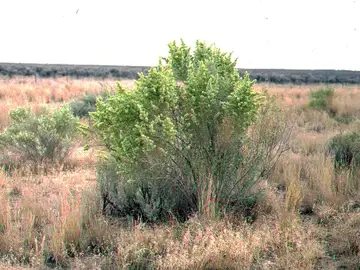 Four-wing saltbush Atriplex canescens · Shrub · 1.2–1.8 m (4–6 ft)
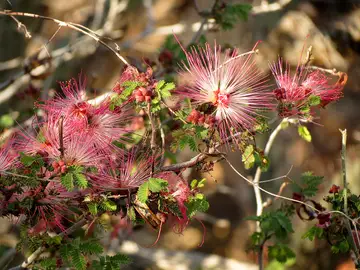 Fairy duster Calliandra eriophylla · Shrub · 0.6–1 m (2–3 ft)
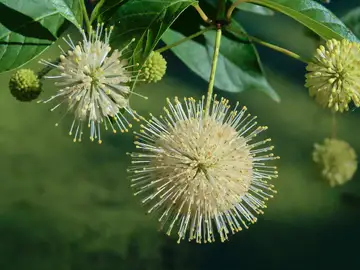 Buttonbush Cephalanthus occidentalis · Shrub · 1.8–3.6 m (6–12 ft)
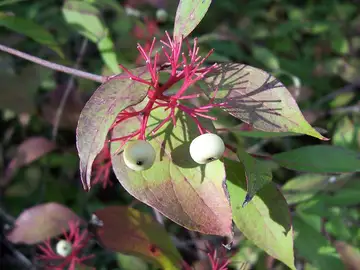 Red twig dogwood Cornus sericea · Shrub · 1.8–2.7 m (6–9 ft)
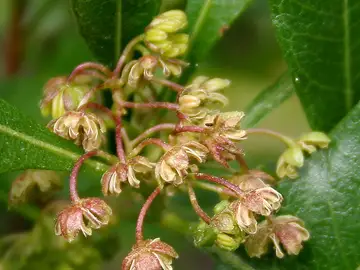 Hop bush Dodonaea viscosa · Shrub · 2.4–3.6 m (8–12 ft)
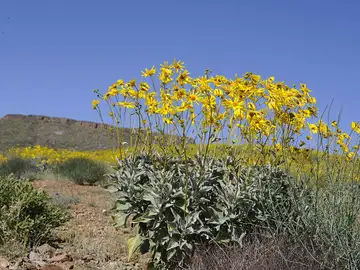 Brittlebush Encelia farinosa · Shrub · 0.6–1 m (2–3 ft)
Try Texas mountain laurel in a plan
Opens your own copy of a finished sample garden in the planner with Texas mountain laurel ready to place; the planner checks it against that garden’s zone, light and moisture.
Plan with Texas mountain laurel
Place it in a design, check it against your zone, light and moisture, and see it at year three and year ten.