Emory oak
Quercus emoryi Torr.
Also called bellota.
Evergreen southwestern oak with stiff, glossy leaves and sweet acorns. A slow, tough shade tree for mid-elevation desert and grassland gardens.

Size over time
Typical landscape size 6–12 m (20–39 ft) tall and 6–10 m (20–33 ft) wide; slow growth, about 35 years to maturity. Intermediate sizes use the planner’s growth curve (k = 0.12) from the BB-2in install size.
Design notes
- Drops most old leaves in spring as new growth flushes.
- Prefers deep, infrequent watering; avoid lawn irrigation over the root zone.
Regions
Native range: Mountains and foothills of Arizona, New Mexico, west Texas and northern Mexico.
Native to these OpenLandscape3D pilot regions:
Native status describes where the species occurs naturally. It is not a promise that it suits a particular garden; site conditions decide that.
Related plants
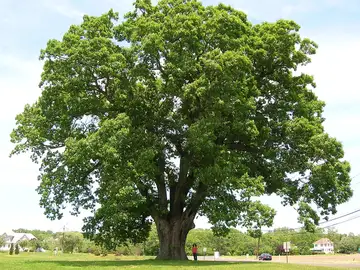 White oak Quercus alba · Tree · 18–25 m (59–82 ft)
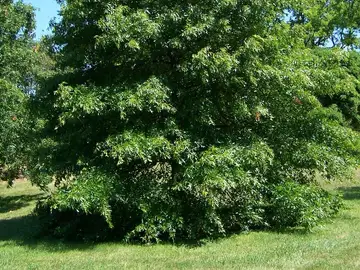 Pin oak Quercus palustris · Tree · 15–21 m (49–69 ft)
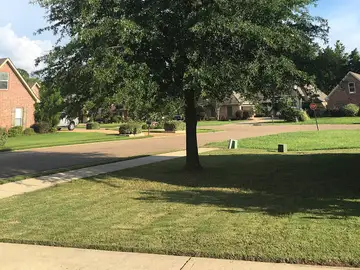 Willow oak Quercus phellos · Tree · 15–23 m (49–75 ft)
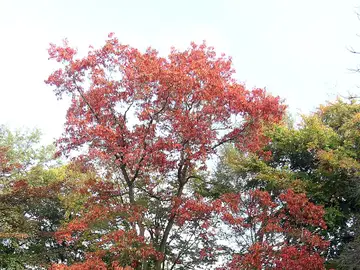 Northern red oak Quercus rubra · Tree · 18–23 m (59–75 ft)
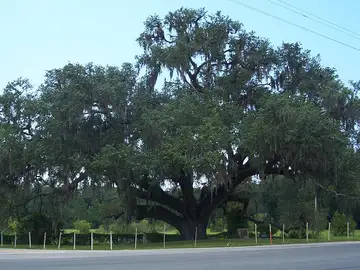 Southern live oak Quercus virginiana · Tree · 12–18 m (39–59 ft)
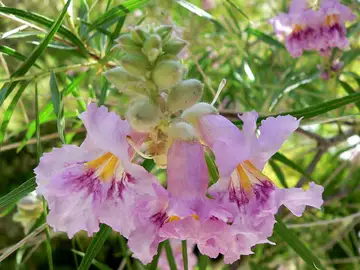 Desert willow Chilopsis linearis · Tree · 5–8 m (16–26 ft)
Try Emory oak in a plan
Opens your own copy of a finished sample garden in the planner with Emory oak ready to place; the planner checks it against that garden’s zone, light and moisture.
Plan with Emory oak
Place it in a design, check it against your zone, light and moisture, and see it at year three and year ten.