Texas sage
Leucophyllum frutescens (Berland.) I.M.Johnst.
Also called Texas ranger, cenizo.
Silver-leaved desert shrub that flushes with lavender-pink flowers after summer rains. A low-water staple of southwestern landscapes.

Size over time
Typical landscape size 1.5–2.4 m (5–8 ft) tall and 1.5–2.4 m (5–8 ft) wide; medium growth, about 6 years to maturity. Intermediate sizes use the planner’s growth curve (k = 0.25) from the #3 install size.
Bloom
Lavender-pink flowers, Jun–Sep (northern-hemisphere months; timing shifts with region and season).
| Plant | J | F | M | A | M | J | J | A | S | O | N | D |
|---|---|---|---|---|---|---|---|---|---|---|---|---|
| Texas sage : Jun–Sep |
Design notes
- Shearing into balls removes the flowers — prune selectively in spring.
- Overwatering and poor drainage cause leggy, short-lived plants.
Regions
Native range: Chihuahuan Desert of Texas and northern Mexico.
Not recorded as native to any of the three pilot regions.
Native status describes where the species occurs naturally. It is not a promise that it suits a particular garden; site conditions decide that.
In the guides
Texas sage comes up in these guides:
Related plants
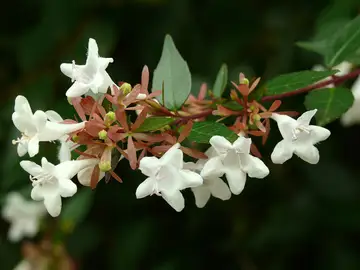 Glossy abelia Abelia × grandiflora · Shrub · 1.2–1.8 m (4–6 ft)
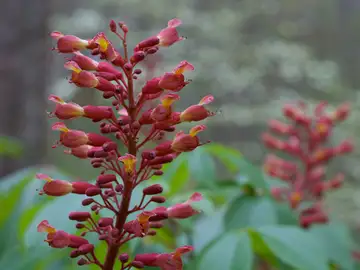 Red buckeye Aesculus pavia · Shrub · 3–6 m (10–20 ft)
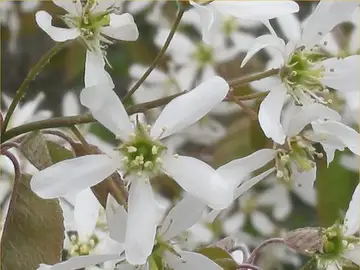 Canadian serviceberry Amelanchier canadensis · Shrub · 3–6 m (10–20 ft)
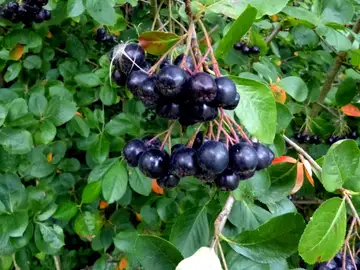 Black chokeberry Aronia melanocarpa · Shrub · 0.9–1.8 m (3–6 ft)
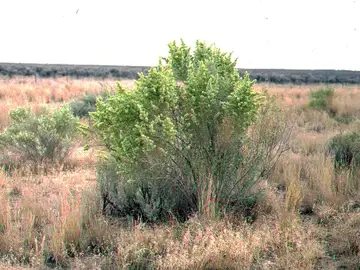 Four-wing saltbush Atriplex canescens · Shrub · 1.2–1.8 m (4–6 ft)
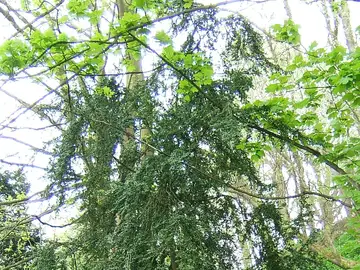 Common boxwood Buxus sempervirens · Shrub · 1–3 m (3–10 ft)
Try Texas sage in a plan
Opens your own copy of a finished sample garden in the planner with Texas sage ready to place; the planner checks it against that garden’s zone, light and moisture.
Plan with Texas sage
Place it in a design, check it against your zone, light and moisture, and see it at year three and year ten.