Burning bush
Euonymus alatus (Thunb.) Siebold
Also called burning bush, winged euonymus.
Popular hedge shrub prized for intense red fall colour. Birds spread its seed, and shade-tolerant seedlings carpet northeastern forest understories.
Listed as invasive / prohibited / noxious in CT, MA, PA. The planner flags it (OL-INVASIVE) for sites in those jurisdictions. Details and sources.

Size over time
Typical landscape size 2.4–4.5 m (8–15 ft) tall and 2.4–4.5 m (8–15 ft) wide; medium growth, about 6 years to maturity. Intermediate sizes use the planner’s growth curve (k = 0.25) from the #3 install size.
Design notes
- "Compact" cultivars still seed and still reach 2–3 m.
- For red fall colour use black chokeberry, highbush blueberry, fothergilla or Virginia sweetspire.
Regions
Native range: Northeastern Asia.
Not recorded as native to any of the three pilot regions.
Native status describes where the species occurs naturally. It is not a promise that it suits a particular garden; site conditions decide that.
Other listings: regulated — US-NY (Prohibited and Regulated Invasive Species (6 NYCRR Part 575)); watch — US-GA (Georgia Invasive Species Council (formerly Georgia Exotic Pest Plant Council) Invasive Plant List).
In the guides
Burning bush comes up in these guides:
Related plants
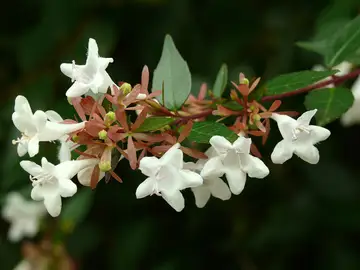 Glossy abelia Abelia × grandiflora · Shrub · 1.2–1.8 m (4–6 ft)
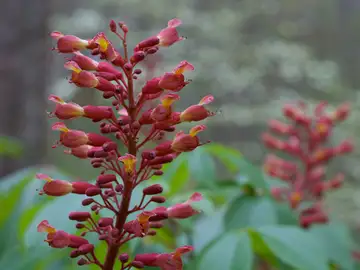 Red buckeye Aesculus pavia · Shrub · 3–6 m (10–20 ft)
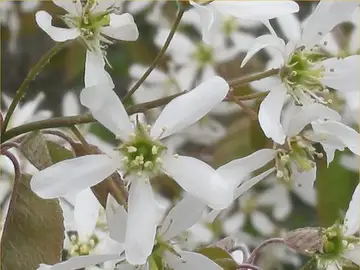 Canadian serviceberry Amelanchier canadensis · Shrub · 3–6 m (10–20 ft)
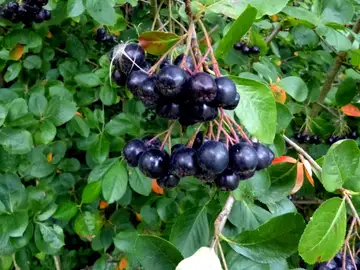 Black chokeberry Aronia melanocarpa · Shrub · 0.9–1.8 m (3–6 ft)
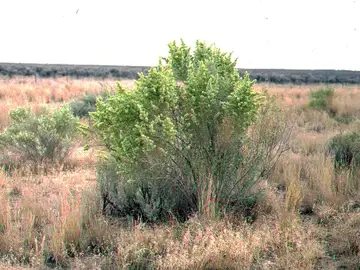 Four-wing saltbush Atriplex canescens · Shrub · 1.2–1.8 m (4–6 ft)
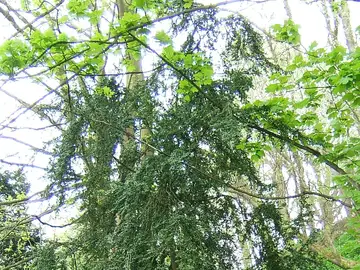 Common boxwood Buxus sempervirens · Shrub · 1–3 m (3–10 ft)
Try Burning bush in a plan
Plan with Burning bush
Place it in a design, check it against your zone, light and moisture, and see it at year three and year ten.