Big sacaton
Sporobolus wrightii Munro ex Scribn.
Also called big sacaton.
Tall, vase-shaped native grass of desert floodplains, tolerant of alkaline and salty soils. Creates a bold seasonal screen.

Size over time
Typical landscape size 1.5–2.1 m (5–7 ft) tall and 1.2–1.8 m (4–6 ft) wide; fast growth, about 2 years to maturity. Intermediate sizes use the planner’s growth curve (k = 0.45) from the #1 install size.
Design notes
- Cut back in late winter.
- Thrives in basins and bioswales that receive runoff.
Regions
Native range: Floodplains of Arizona, New Mexico, Texas and northern Mexico.
Native to these OpenLandscape3D pilot regions:
Native status describes where the species occurs naturally. It is not a promise that it suits a particular garden; site conditions decide that.
In the guides
Big sacaton comes up in this guide:
Related plants
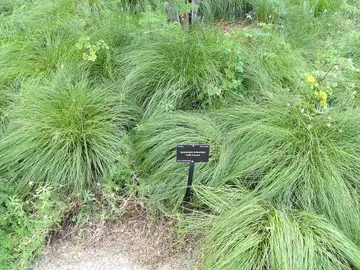 Prairie dropseed Sporobolus heterolepis · Grass · 0.6–0.9 m (2–3 ft)
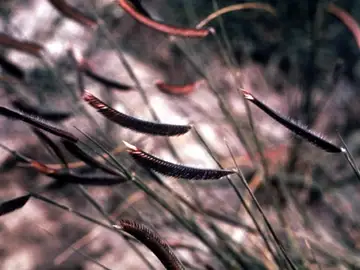 Blue grama Bouteloua gracilis · Grass · 0.3–0.6 m (12–24 in)
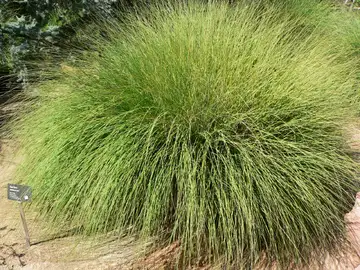 Deer grass Muhlenbergia rigens · Grass · 0.9–1.5 m (3–5 ft)
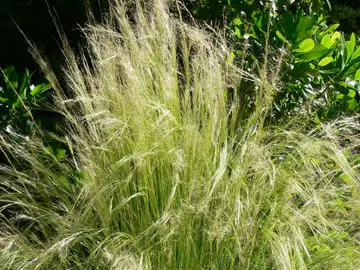 Mexican feather grass Nassella tenuissima · Grass · 0.3–0.6 m (12–24 in)
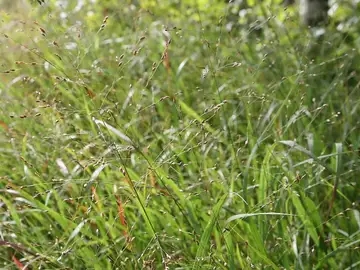 Shenandoah switchgrass Panicum virgatum 'Shenandoah' · Grass · 0.9–1.2 m (3–4 ft)
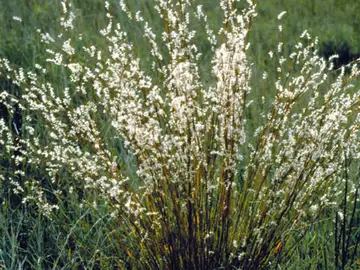 Little bluestem Schizachyrium scoparium · Grass · 0.6–1.2 m (2–4 ft)
Try Big sacaton in a plan
Opens your own copy of a finished sample garden in the planner with Big sacaton ready to place; the planner checks it against that garden’s zone, light and moisture.
Plan with Big sacaton
Place it in a design, check it against your zone, light and moisture, and see it at year three and year ten.