Prairifire crabapple
Malus ‘Prairifire’
Also called flowering crabapple.
Small rounded crabapple with deep pink flowers, reddish-purple new leaves and small persistent dark red fruit that birds take through winter.

Size over time
Typical landscape size 5–6 m (16–20 ft) tall and 5–6 m (16–20 ft) wide; medium growth, about 25 years to maturity. Intermediate sizes use the planner’s growth curve (k = 0.25) from the #15 install size.
Bloom
Magenta flowers, Apr–May (northern-hemisphere months; timing shifts with region and season).
| Plant | J | F | M | A | M | J | J | A | S | O | N | D |
|---|---|---|---|---|---|---|---|---|---|---|---|---|
| Prairifire crabapple : Apr–May |
Design notes
- Chosen for good apple scab resistance; older crabapple cultivars often defoliate by midsummer.
- Keep away from eastern red cedar where cedar-apple rust is common.
Regions
Native range: Garden hybrid.
Not recorded as native to any of the three pilot regions.
Native status describes where the species occurs naturally. It is not a promise that it suits a particular garden; site conditions decide that.
Related plants
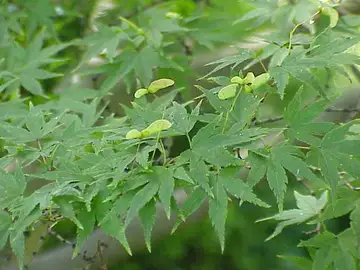 Japanese maple Acer palmatum · Tree · 4–8 m (13–26 ft)
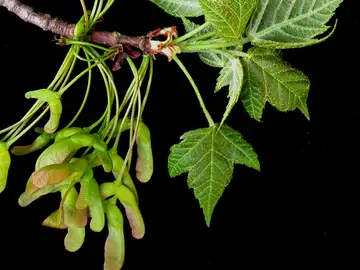 Red maple Acer rubrum · Tree · 12–18 m (39–59 ft)
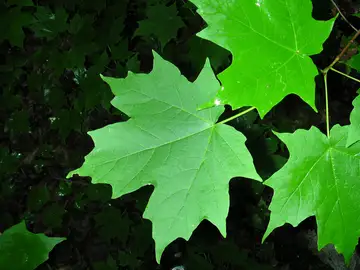 Sugar maple Acer saccharum · Tree · 15–22 m (49–72 ft)
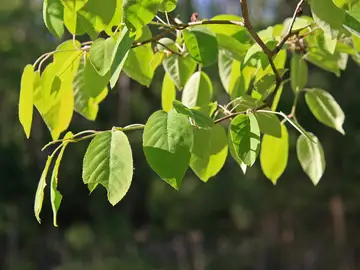 Downy serviceberry Amelanchier arborea · Tree · 5–8 m (16–26 ft)
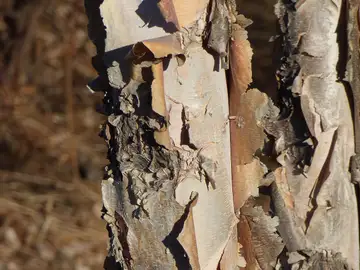 River birch Betula nigra · Tree · 12–18 m (39–59 ft)
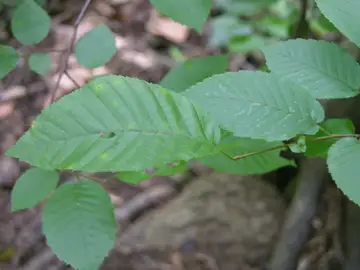 American hornbeam Carpinus caroliniana · Tree · 6–9 m (20–30 ft)
Try Prairifire crabapple in a plan
Opens your own copy of a finished sample garden in the planner with Prairifire crabapple ready to place; the planner checks it against that garden’s zone, light and moisture.
Plan with Prairifire crabapple
Place it in a design, check it against your zone, light and moisture, and see it at year three and year ten.